Nov 1, 2026wkelyson
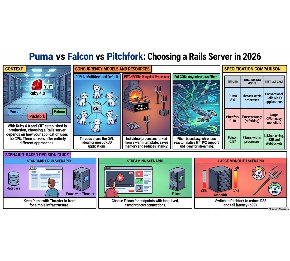
Puma, Falcon or Pitchfork? Choosing a Rails App Server in 2026
Threads, fibers or forked processes? A practical comparison of Puma 8, Falcon 0.57 and Pitchfork 0.18 for Rails on Ruby 4, with configs and a decision by scenario.
Search within posts tagged with rails using the filters below.
Threads, fibers or forked processes? A practical comparison of Puma 8, Falcon 0.57 and Pitchfork 0.18 for Rails on Ruby 4, with configs and a decision by scenario.
Heroku is in maintenance mode and Rails 8 ships with Kamal out of the box. Here is how to decide between your own VPS and a managed platform, with a production-ready deploy.yml.
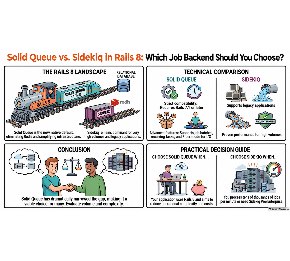
Solid Queue is the Rails 8 default and Sidekiq is the long-standing incumbent. Here is how they compare in late 2026, which Rails versions each one supports, and a decision guide for new and existing apps.
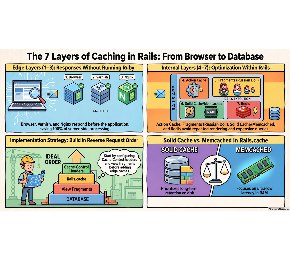
A web application's speed is not just the speed of the app server and the database. Between the browser and the SELECT there are seven places where the answer may already exist. This post walks through all of them, with the Rails configuration for each and what each one actually saves.
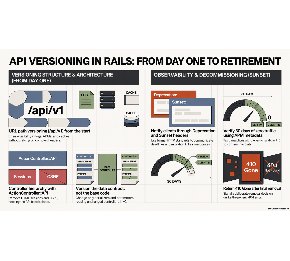
Most Rails APIs happen rather than get designed: a format.json branch grows into a contract nobody wrote down. Here is the structure that fixes it: path versioning, a three-layer controller hierarchy, token auth outside the versioned tree, v2 without copying v1, and NRQL to prove when v1 can be deleted.
Rails 8.0 stops getting security patches on November 7, 2026. Here is what changes between 8.0 and 8.1, the seven new defaults and which ones can bite, and a dual-boot plan you can finish before the deadline.
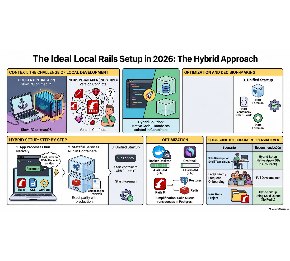
Everything native with Procfile.dev, or everything in containers with docker-compose? The setup that works best day to day sits in between: native app processes, stateful services in containers, and a container runtime that does not eat your RAM.
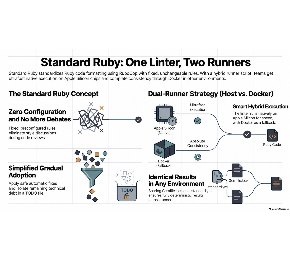
Standard gives Ruby teams a linter and formatter with nothing to argue about. Here is what it does, how it sits on top of RuboCop, and a small script that runs it natively on Apple Silicon and in Docker everywhere else, with identical results.
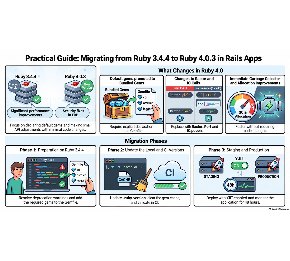
Ruby 4.0 is the first major version bump in over a decade, but most of the work is under the hood. Here is what actually breaks when moving a Rails app from 3.4.4 to 4.0.3, what you gain, and a phased upgrade plan you can run in a week.
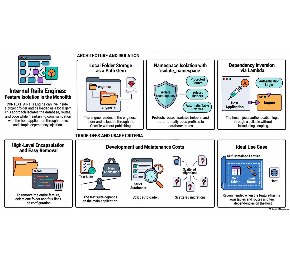
How I built short links and click tracking as a Rails engine in a folder of the main app, with the real code and the tradeoffs.